A smarter Europe
Agriculture and the food processing industry are facing a major transition. The entire food system needs to find a better balance with nature, the environment, and health. Challenges the sector must tackle include reducing the use of artificial fertiliser and
crop protection products and a growing shortage of workers due to heavy and monotonous work. On the food production side, adjustments are needed, such as the use of mechanical and thermal weed control, the use of more flexible and smarter cultivation systems, and the use of precision fertilisation. On the food processing side, it is important to be able to handle more diverse and smaller quantities of crops that are sold more locally.
About us
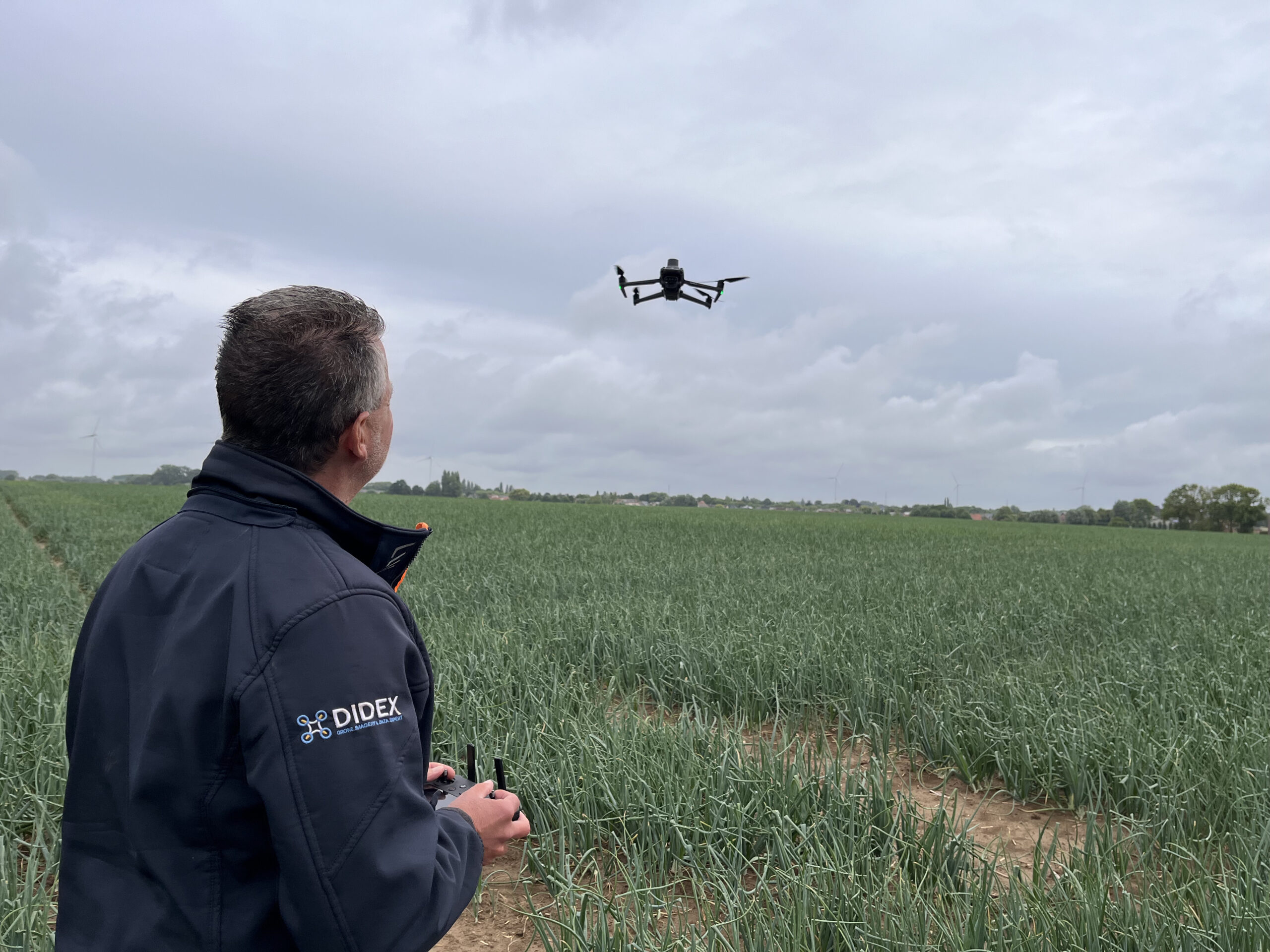
New technologies such as robots, drones, sensors, AI, and big data are necessary to make this transition, and Smart Farming and Food Processing aim to ensure their deployability in the agricultural and food processing industries. The project primarily focuses on SMEs and aims to bring together farmers, technology developers, and knowledge institutions around concrete issues. New solutions will be developed and existing systems adapted in eight innovation pathways.
Innovating through collaboration
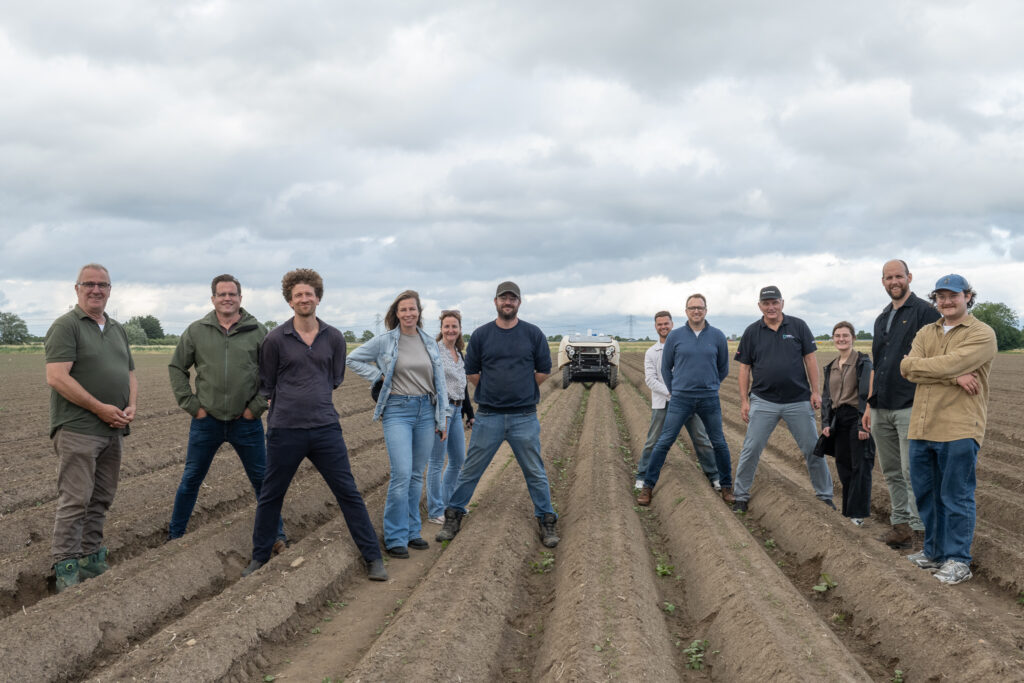
This project primarily aims to develop a number of concrete applications that provide solutions to issues faced by plant-based farms or food processing companies. Through this, we aim to contribute to accelerating the agricultural transition.
What does the project have to offer?
- From the project, we are recruiting potential technical companies that can further develop an application.
- There is funding available for both the company with the challenge and the technical company that will develop the application.
- Knowledge, expertise and support are provided by both a Dutch and a Flemish knowledge institution/field lab.
Project Objectives
The project aims to make an important contribution to the necessary transition in agriculture and the food processing industry by addressing a selected number of challenges and by developing technically and commercially promising innovative solutions to tackle and accelerate the transition.
There are opportunities for businesses here, with this project primarily focusing on involving SMEs. However, where necessary for developing the right applications, we will also involve larger companies. Wherever the application refers to companies, this is what we mean.
In this project, we are focusing on 3 selected challenges within 2 sectors, namely:
Smart Agro:
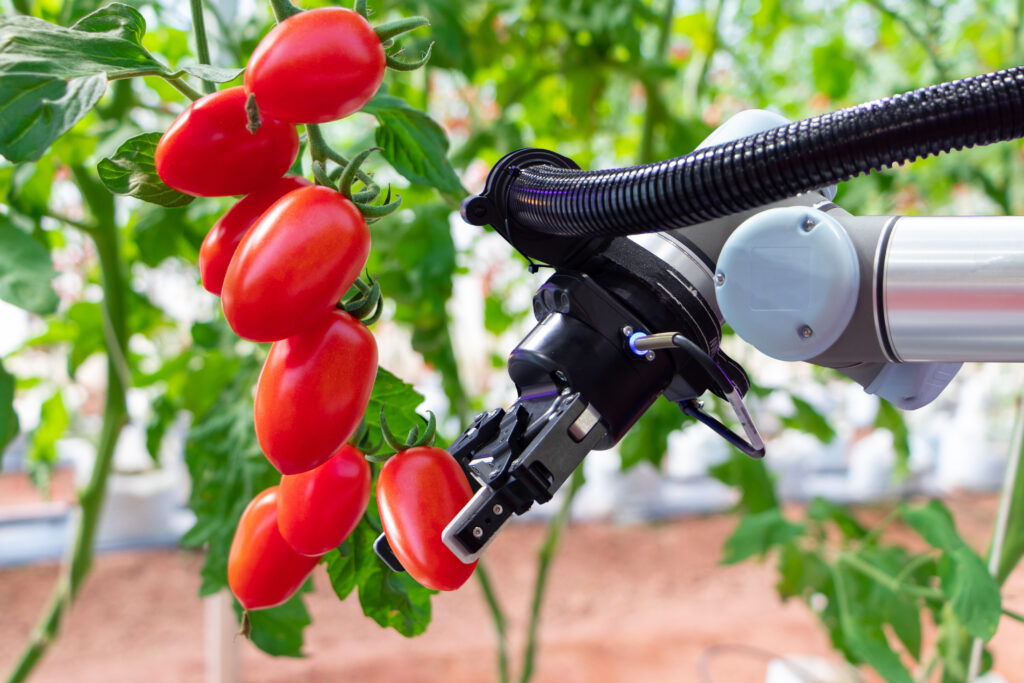
- Deployment of autonomous robots for weed control, pruning, harvesting, precision fertilisation, and identification and management of crop diseases and pests
- Automation of small-scale cultivation, both in the open field and in greenhouses/ polytunnels, including brassicas, chicory, and strawberries.
Smart Food Processing
- Smart automation of food handling processes, including flexible and robust production systems, for example for small batch sizes.
In addition to these 3 challenges, there is 1 overarching theme, where all pilot companies will be challenged: Utilising smart data within their own organisation and in the value chain, for example for energy reduction, reliability, raw material tracing, circularity and waste reduction.
The specific project objectives are:
- Strengthening and expanding the cross-border research and knowledge infrastructure in the agrofood and food processing sectors, including companies and cooperation with businesses.
- Developing and formulating (1 to 4) clearly defined issues for each challenge, in collaboration with the issue owners and, where appropriate, external experts.
- Recruiting and selecting companies that can work on the developed issues in collaboration with the requesters and the assessment committee (external experts).
- Developing solutions for the challenges and elaborated issues through the establishment of an open partner budget and the execution of 8-10 innovation projects by companies.
- Increasing/maximising the success rate of innovation projects through the support, guidance, and monitoring of knowledge institutions, field labs, and network organisations.
- Evaluating found innovative solutions, including the process and developing business cases for these solutions, including market consultation.
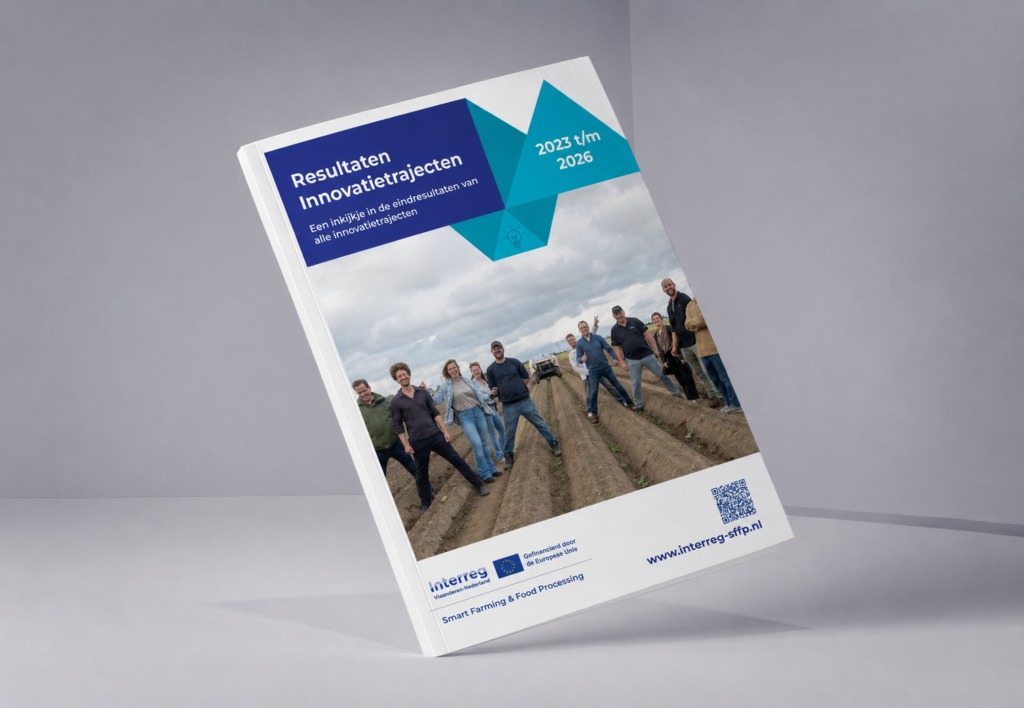
The Results Guide
For three years, Dutch and Flemish farmers, tech companies, and knowledge institutions worked together on eight innovative projects – from autonomous weeding robots to smart packaging lines. In the online guide, you can read for each project what the collaboration has yielded and what economic, social, and cross-border impact it is making.
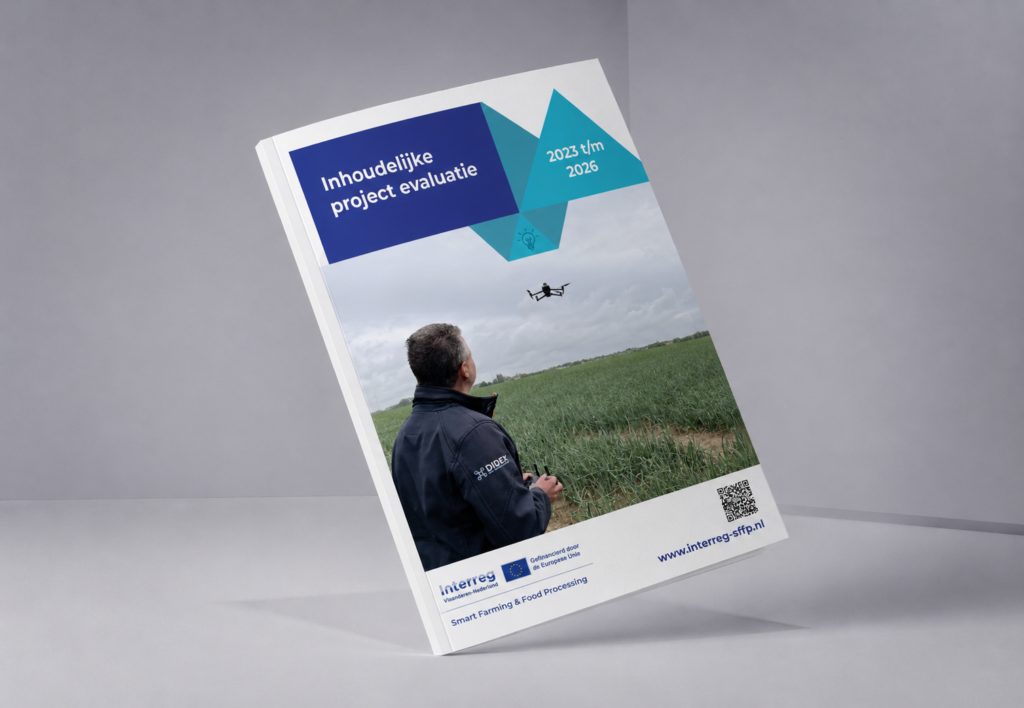
The Content Project Evaluation
How do you bring innovations from idea to working prototype — and what is needed to bring them to market? In the substantive project evaluation, we will honestly look back at three years of Smart Farming & Food Processing: the technological leap achieved, the analysis per innovation pathway, and the lessons for future collaborations.
SME Agrifood Demo & Inspiration Event
Aftermovie Slot Event
“I find it inspiring that we have launched these innovation initiatives from the perspective of the person facing the challenge. By first clearly defining the challenge and then bringing in suitable partners, we create targeted and sustainable solutions that meet real needs.”
Lisanne Ottevanger – Project Manager Breda Robotics
Projects • Interreg Smart Farming & Food Processing